


How Do You Test for Legionella in Water Systems?
If you’re responsible for a large building with a water system, Legionella testing is an important part of maintaining water hygiene and meeting your legal responsibilities. The bacteria can develop in man-made water systems without visible signs, so regular monitoring is essential.
Testing involves more than taking a water sample. It requires planned sampling, laboratory analysis and professional interpretation to identify potential risks.
This guide explains how Legionella testing works, when it may be needed and why professional support matters.
Why Testing For Legionella Matters
Legionella is a naturally occurring bacterium found in rivers, lakes, and reservoirs, but may become dangerous when it enters artificial water systems where conditions allow it to multiply. If contaminated water is dispersed as a fine mist and inhaled, it can cause Legionnaires’ disease, a potentially serious or even fatal form of pneumonia.
Certain conditions encourage bacterial growth, including:
- Water temperatures between 20°C and 45°C
- Stagnant water caused by infrequently used outlets or dead legs
- Scale, sediment, sludge, and biofilm that provide nutrients for bacteria
- Poorly maintained water systems where regular monitoring is not carried out
Because these conditions are common in many commercial buildings, testing forms an important part of a wider water management strategy. Regular monitoring helps identify developing risks before they become larger compliance or health concerns, allowing corrective action to be taken where necessary.
Which Water Systems Should Be Checked?
Although Legionella can be present in many different environments, some water systems require closer attention because they provide favourable conditions for bacterial growth or generate water droplets that can be inhaled.
Examples include:
Commercial, Industrial, and Hospitality Buildings
- Offices
- Hotels
- Retail premises
- Leisure facilities
- Warehouses
- Industrial sites
Education and Public Buildings
- Schools
- Colleges
- Universities
- Council buildings
- Libraries
- Community facilities
Healthcare and Care Settings
- Hospitals
- GP surgeries
- Dental practices
- Care homes
- Clinics
High-Risk Water Systems
- Hot and cold water distribution systems
- Cold water storage tanks
- Cooling towers
- Evaporative condensers
- Spa pools
- Hot tubs
- Showers
- Vehicle wash systems
- Food manufacturing facilities
The complexity of your system, the people using your building, and the level of risk identified during your Legionella assessment all influence how frequently monitoring should take place.

How Do You Test For Legionella?
ProfessionWhile laboratory analysis is an important part of the process, effective Legionella Testing begins long before any samples are sent away.
Identify Suitable Sampling Points
A professional technician first identifies representative locations throughout the water system. These aren’t selected at random; in fact, choosing the correct sampling points is one of the most important parts of obtaining meaningful results. Samples are taken from outlets and areas most likely to provide useful information about the condition of the entire system.
Depending on the building, this may include sentinel outlets, storage tanks, calorifiers, or other locations identified during the risk assessment.
Collect Sterile Water Samples
Water samples must be collected using sterile containers prepared specifically for microbiological analysis, often containing sodium thiosulphate to neutralise any disinfectants present within the water. Each sample is then carefully labelled to record its location, temperature, and collection time. Using separate sterile bottles for every outlet prevents cross-contamination and ensures laboratory results accurately reflect each sampling point.
Alongside water sampling, technicians frequently record temperatures throughout the system, as maintaining correct hot and cold water temperatures is one of the most effective ways of controlling Legionella growth.
Laboratory Analysis
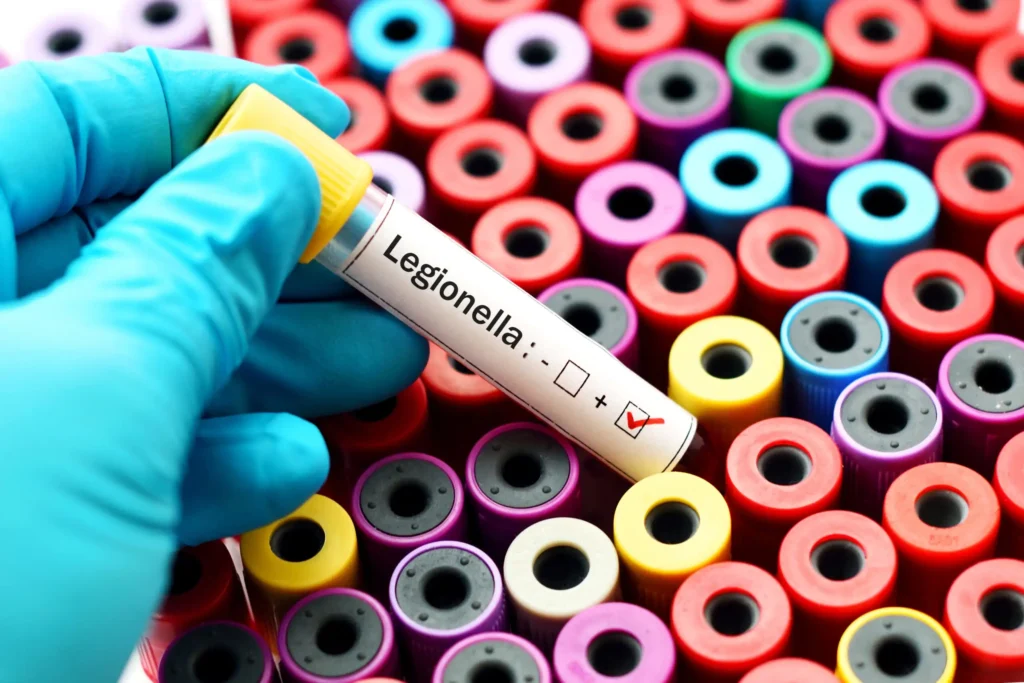
Once collected, samples are sent to a UKAS-accredited laboratory for microbiological analysis. The laboratory measures the concentration of Legionella bacteria present within each sample. Results are typically reported as colony-forming units per litre (CFU/L), indicating bacterial levels within the sampled location.
However, these figures should never be viewed in isolation. Experienced professionals interpret laboratory findings alongside the design of the water system, previous monitoring results, and the overall level of risk identified during the assessment.
Review The Results
Receiving laboratory results is only one stage of effective Legionella testing. If elevated bacterial levels are identified, further investigation may be required to establish why the bacteria have developed. Factors such as poor temperature control, infrequently used outlets, inadequate cleaning, or system design issues may all contribute to bacterial growth.
By understanding the wider condition of the water system, appropriate remedial action can be recommended to reduce future risk.
Can You Use Your Own Legionella Water Testing Kit Instead?
If you’ve searched online for a Legionella water testing kit, you’ve probably discovered that DIY sampling kits are widely available. These kits usually allow you to collect water samples before sending them to a laboratory for analysis. While this may seem like a convenient option, there are several important limitations to be aware of.
Accurate testing depends on selecting the correct sampling locations, preventing contamination during collection, and understanding how your water system operates. Without this knowledge, even professionally analysed samples may fail to provide a reliable picture of the overall risk. Interpreting laboratory reports also requires technical expertise. Results must be considered alongside water temperatures, system design, previous monitoring records, and the findings of a Legionella Risk Assessment before appropriate action can be recommended.
Professional Legionella testing offers greater confidence that no critical issues have been overlooked.
Is Legionella Testing A Legal Requirement?
While Legionella testing is not technically a legal requirement, UK health and safety legislation does place a duty on employers, landlords, and those responsible for premises to assess and manage the risk of exposure to Legionella bacteria. Guidance contained within ACOP L8, HSG274, and, where applicable, HTM 04-01 and HTM 01-05 sets out how these responsibilities should be managed.
In practice, this begins with a professional Legionella assessment, which evaluates the design, condition, and operation of the water system. The findings determine what control measures, inspections, temperature monitoring, and, where appropriate, microbiological testing should be introduced.
Not every water system requires routine laboratory sampling. The need for testing depends on the level of risk identified and the type of water system involved. A competent Legionella specialist can advise on the most appropriate monitoring programme for your premises.e-off assessment.
What Happens During a Professional Legionella Risk Assessment?
A professional Legionella risk assessment provides a comprehensive picture of your water system and identifies whether additional monitoring or remedial work is required.
During an assessment, a competent technician may:
- Inspect the overall condition of your water system.
- Identify potential areas of stagnation or poor water circulation.
- Carry out temperature monitoring throughout the system.
- Complete a detailed check of storage tanks, outlets, and associated equipment.
- Review maintenance records and existing control measures.
- Take water samples where appropriate.
- Identify non-compliant components or areas requiring improvement.
- Produce a detailed report outlining findings and recommendations.
Rather than providing a one-size-fits-all solution, the assessment forms the basis of a tailored water management programme designed specifically for your building.
What Happens If Legionella Is Found?
Finding Legionella bacteria during monitoring does not automatically mean there is an immediate danger to building occupants. Instead, it highlights that the current conditions require investigation and corrective action.
Depending on the laboratory results and the circumstances of your water system, recommendations may include:
- Flushing infrequently used outlets
- Cleaning and disinfecting water storage tanks
- Thermal or chemical disinfection
- Removing dead legs and redundant pipework
- Improving temperature control
- Updating maintenance procedures
- Introducing more frequent monitoring
- Completing remedial works to improve the overall water system
Addressing these issues promptly helps reduce the likelihood of bacterial growth recurring while supporting ongoing compliance with current guidance.
Why Choose Guardian Legionella Services?
Effective Legionella testing requires technical expertise, practical experience, and a thorough understanding of current legislation. Known as The Legionella People, we work with organisations across the UK, providing tailored Legionella services for schools, healthcare providers, commercial premises, local authorities, industrial facilities, and many other sectors.
Our experienced technicians carry out comprehensive assessments, routine monitoring, and water sampling in accordance with all relevant guidelines. We also provide bespoke reporting, ongoing Legionella control schemes, and remedial works and recommendations that reflect the specific needs of your premises.
As members of the Legionella Control Association, CHAS, Constructionline, and SafeContractor, we’re committed to delivering professional, reliable services that help our clients remain compliant with confidence.
Book Professional Legionella Testing Today
Whether you’re arranging routine monitoring for an existing water management programme or need guidance on how to test for Legionella in water for the first time, Guardian Legionella Services can help. Our experienced specialists provide the professional services you need for organisations across the UK. We’ll help you understand your responsibilities, identify any risks within your water system and recommend practical solutions that support long-term compliance.
To discuss your requirements or request a quotation, get in touch with us today and speak to one of our Legionella specialists.y to answer your questions, provide a competitive quotation, and help you find the right solution for your property or portfolio.
